
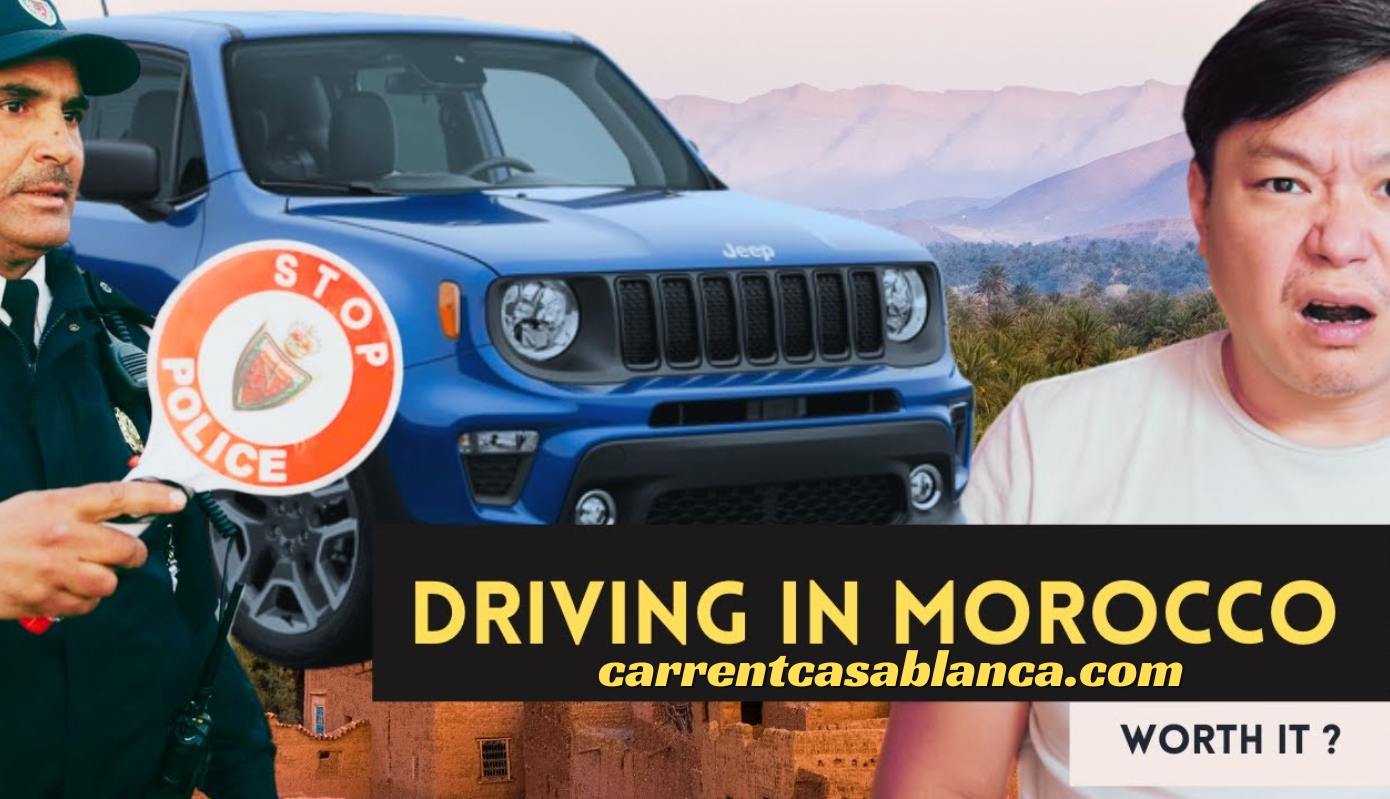
Things to Know Before Driving in Morocco
Driving in Morocco Tips (2026 Guide): Safety, Rules, Police Checkpoints & Road Reality
Driving in Morocco is safe for tourists who stay alert and drive defensively. Speed limits are strictly enforced: 60 km/h in cities, 100 km/h on rural roads, and 120 km/h on highways. Police checkpoints are common at every town entrance. Avoid night driving, rent a small car, and use offline navigation apps. With the right preparation, a Morocco road trip is one of the most rewarding journeys you can take.
Morocco is a country built for road trips. From the snow-capped Atlas Mountains and the ancient medinas of Fes and Marrakech to the golden dunes of the Sahara near Merzouga, no public bus or guided tour gives you the freedom that your own car does. Thousands of tourists self-drive every year – and most of them wish they had done it sooner.
But driving in Morocco is genuinely different from driving in Europe or North America. The traffic feels unpredictable at first. Police checkpoints catch you off guard. Speed traps are real. And city driving – especially in Casablanca and Marrakech – demands a completely different mindset. Many experienced travelers recommend arranging your vehicle in advance through trusted local providers such as Car Rent Casablanca, especially during peak travel seasons.
10 Things to Know Before Driving in Morocco (2026)
- Driving is safe but unpredictable; stay alert at all times.
- Follow speed limits: 60 km/h in cities, 80–100 km/h rural, 120 km/h highways.
- Expect police checkpoints at almost every town entrance.
- Avoid driving at night; roads are poorly lit and risky.
- Road quality varies: highways are smooth, rural/mountain roads are narrow.
- Rent a small car for easier city driving and parking.
- Use offline maps on Google Maps or Maps.me.
- Keep fuel above half tank, especially in remote areas.
- Horn signals and flashing lights are common; watch for them.
- City driving (Marrakech, Casablanca) is hectic; stay calm and patient.
Is It Safe to Drive in Morocco?
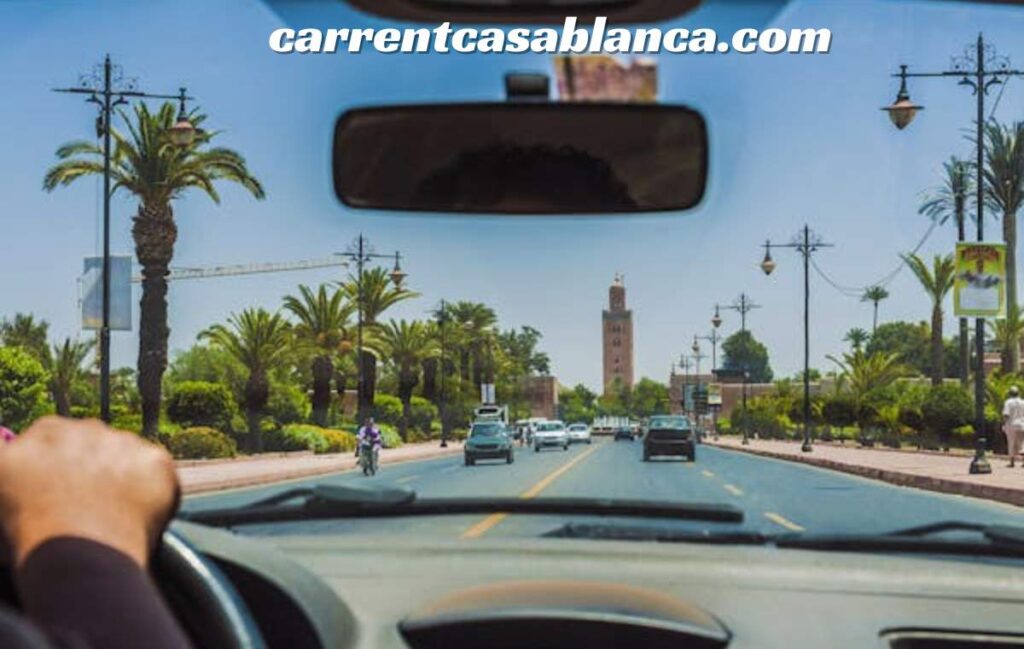
Yes – driving in Morocco is generally safe for tourists. The bigger challenge is not road quality but driving behavior. Highways are modern and well-maintained. Cities require patience and defensive driving. Rural areas demand awareness of animals, pedestrians, and narrow roads.
According to WHO road safety data, Morocco’s fatal accident rate of 18 per 100,000 inhabitants sits below the African average of 26.6 and is comparable to some parts of the United States. The main safety factors to manage are:
- Speeding fines enforced strictly – even 5 km/h over the limit
- Unpredictable overtaking behavior on two-lane rural roads
- Pedestrians, animals, and cyclists sharing rural roads without lighting
- Dense scooter traffic in cities like Marrakech and Casablanca
The key insight every experienced Morocco driver shares: it is not dangerous – it is unpredictable. Adapt your mindset, drive defensively, and the country opens up beautifully.
Morocco Driving Laws and Speed Limits (2026)
Understanding Morocco’s traffic laws is not optional. Enforcement is strict, particularly for speeding, and police presence is constant on all major roads. Here is everything you need to know before you turn the key.
Morocco Speed Limits – Official Table
| Road Type | Speed Limit | Notes |
|---|---|---|
| Urban areas (towns & cities) | 60 km/h | Strictly enforced; cameras common |
| Rural roads (outside towns) | 80–100 km/h | Limit drops suddenly near villages |
| Expressways (voie express) | 100 km/h | Well-signposted |
| Motorways (Autoroutes) | 120 km/h | Toll roads; safest for long distances |
Important: Speed limits change without warning as you approach towns. Police officers routinely position themselves just after a speed-reduction sign – precisely where tourists get caught. When in doubt, 60 km/h is always safe.
Essential Road Rules
- right-hand side of the road
- mandatory for all passengers, including rear seats
- illegal (hands-free is permitted)
- Alcohol tolerance is near zero
- inside the roundabout have priority – but not all drivers respect this
- Headlight flashing by oncoming drivers usually means
Police Checkpoints in Morocco – What Actually Happens
Police checkpoints are extremely common in Morocco, located at the entrance and exit of almost every town. Slow to 20–30 km/h as you approach. Stop only if signalled. Always stay calm, show documents politely, and never offer unofficial payments.
This is the topic most tourists are most anxious about – and the one most guides handle poorly. Here is the reality.
Where Checkpoints Are Located
- At the entrance and exit of every town and village
- On popular tourist routes – especially Marrakech to Merzouga
- At roundabouts on the edge of major cities
- Alongside speed-reduction zones on national roads (N-roads)
What to Do at a Checkpoint
- Slow to 20–30 km/h as you approach – do this proactively
- Watch for hand signals or ‘STOP’ signs; stop only if instructed
- Turn off music, lower your window, and remain calm
- Hand over your driving licence, passport, and rental agreement
- Answer questions briefly and politely – a smile goes a long way
- If fined, ask for an official ticket (it can be paid at a police station)
What to Avoid
- Never offer money informally – always request an official fine document
- Do not argue about whether you were speeding – stay polite
- Do not leave the car unless asked to
Most checkpoint stops take under two minutes for tourists with valid documents. The experience is far less stressful than the stories suggest. Stay prepared, drive legally, and checkpoints become a minor inconvenience rather than a problem.
Road Conditions in Morocco: What to Expect by Area
Morocco’s road network ranges from world-class toll motorways to single-lane mountain tracks. Knowing what to expect before you set off saves stress and prevents costly mistakes.
| Road Type | Condition | Key Challenge | Best Vehicle |
|---|---|---|---|
| Motorways (Autoroutes) | Excellent | Toll booths (cash or Moroccan card) | Any car |
| National roads (N-roads) | Good–Fair | Speed checks, animals near villages | Any car |
| Mountain roads (Atlas) | Variable | Sharp bends, rockfall, steep drops | Small car or 4×4 |
| Desert tracks (near Merzouga) | Poor–Rough | Sand drifts, no signage | 4×4 strongly advised |
| City streets (Marrakech, Casa) | Good | Traffic, scooters, pedestrians | Small car essential |
Toll Costs in Morocco (2026 Estimates)
- Marrakech to Agadir: approx. 70–90 MAD
- Casablanca to Marrakech: approx. 70–85 MAD
- Tangier to Casablanca: approx. 120–140 MAD
- Casablanca to Rabat: approx. 18–22 MAD
Toll booths accept cash (Moroccan dirhams) or Moroccan bank cards. Carry small dirham notes specifically for tolls – exact change speeds up the process significantly.
City-by-City Driving Guide
Driving in Marrakech: What Tourists Actually Experience
Marrakech is the most intense driving environment in Morocco. Scooters dominate, lane discipline is minimal, and parking is a competitive sport. First-time drivers should budget extra time and avoid peak hours.
- Traffic is worst 8–10 AM and 5–8 PM – avoid these windows when possible
- Scooters will overtake you on both sides simultaneously – expect it, don’t react
- Do not attempt to drive inside the medina – it is effectively impossible and unnecessary
- Parking is easiest in supervised lots near the medina walls – cost is 5–20 MAD
- The Gueliz (new city) area is calmer and easier to navigate by car
- One-way streets change without notice – use Google Maps in live mode
Driving in Casablanca: Traffic and Timing Tips
Casablanca has the most complex traffic in Morocco. The highway bypass (ring road) is your best friend – use it rather than driving through the city centre.
- Mohammed V International Airport (CMN) is 30 km south of the city – no need to enter central traffic
- Avoid the city centre during morning and evening rush hours (7–9 AM, 5–7 PM)
- The Autoroute bypasses central Casablanca – use it for transit between northern and southern Morocco
- Parking meters are common in the centre; supervised parking lots are easier
- Casablanca drivers are the most assertive in Morocco – maintain your space calmly
Driving in Other Cities
- Agadir and Essaouira: significantly calmer, easier for beginners, good road signs
- Rabat: organized, better signage than most Moroccan cities, calmer traffic
- Fes: avoid driving in the medina area entirely – it is a pedestrian maze
- Chefchaouen: mountain access road is narrow; park at the lower lots and walk
- Tangier: busy port city; follow GPS and allow extra time for ferry connections
Night Driving in Morocco – Why You Should Avoid It
Driving at night in Morocco is not recommended. Poor or absent street lighting, unlit vehicles, pedestrians on roads, and animals make after-dark driving significantly more dangerous. Plan to reach your destination before sunset.
This is not exaggerated caution. The specific risks include:
- Donkeys, goats, and camels on roads with no reflectors or lighting
- Pedestrians walking along road edges in dark clothing with no visibility
- Trucks and older vehicles operating without functioning rear lights
- Rural roads without lane markings becoming nearly invisible
- Fatigue compounded by unfamiliarity with roads
If you must drive after dark, stick exclusively to motorways (Autoroutes). They are lit, well-signed, and segregated from local traffic. Never drive on rural N-roads or mountain roads after sunset.
Fuel, Gas Stations, and Practical Costs
Fuel Prices in Morocco (2026 Estimates)
- Petrol (essence): approximately 13–15 MAD per litre
- Diesel (gasoil): approximately 11–13 MAD per litre – cheaper and more widely available
Gas stations in Morocco are full-service. An attendant fills your tank; you do not need to get out of the car. Tipping is not mandatory but 5–10 MAD for a window clean is appreciated.
Fuel Strategy
- Never let your tank drop below half, especially when leaving major cities
- Petrol stations become sparse in the High Atlas and near the Sahara
- Diesel cars are the most economical choice for long Morocco road trips
- Major stations (Total, Afriquia, Vivo Energy) accept international bank cards – smaller stations cash only
Renting a Car in Morocco: Everything You Need to Know
Choosing the right rental car and company is one of the most important decisions you will make for your Morocco trip. Here is what experienced Morocco drivers always do.
Documents Required
- Valid driving licence from your home country (must have been held for at least 1 year)
- Passport
- Rental agreement and insurance documents
- International Driving Permit (IDP): not always legally required, but strongly recommended for rural police checkpoints
- Minimum driver age: 21 for most companies; 23–25 for SUVs and premium vehicles
Choosing the Right Vehicle
- Small car (Dacia Logan, Renault Clio, Hyundai i10): ideal for cities and standard roads
- SUV or 4×4: essential if you plan to drive in the Atlas Mountains or near the Sahara
- Economy cars: best fuel efficiency for long highway routes
- Avoid automatic transmission unless you request it specifically – most Moroccan rentals are manual
Car Rental Checklist – Before You Drive Away
- Film the entire exterior and interior before accepting the car
- Ensure all existing scratches, dents, and marks are on the rental agreement
- Check tyre condition, spare tyre, and jack
- Confirm fuel policy (full-to-full is best)
- Understand your insurance excess (deductible) and consider full coverage
- Save the rental company’s emergency number in your phone
- Test all lights, air conditioning, and windscreen wipers
Insurance Advice
Car rental insurance in Morocco is an area where tourists regularly lose money. The base CDW (Collision Damage Waiver) included with most rentals still leaves a significant excess – sometimes 5,000–15,000 MAD – that you pay if the car is damaged. Options:
- Purchase full zero-excess insurance from the rental company (expensive but simple)
- Buy annual car hire excess insurance before your trip (cost-effective for multiple rentals)
- Check your credit card benefits – some cards include rental car coverage
20 Essential Driving in Morocco Tips (Proven and Practical)
This is the section bookmark. These are the tips that make the difference between a stressful trip and a smooth one.
- Follow speed limits strictly
- Slow proactively at every town entrance
- Never drive after dark on rural or mountain roads
- Rent the smallest car that fits your luggage
- Download Maps.me offline before you leave WiFi
- Keep fuel above half tank at all times
- Carry your documents accessible but not on display
- When an oncoming car flashes headlights
- Right indicator from the car in front means safe to overtake
- Use your horn gently
- At roundabouts
- Never park against red and white curbs
- In cities, use supervised parking lots
- Do not drive into medinas
- Keep small dirham notes for toll roads
- Film the rental car on pickup
- Avoid peak traffic hours in Casablanca
- Take regular breaks on long drives
- Do not stop for strangers flagging you down
- Plan daily driving distances at 200–250 km maximum
Common Mistakes Tourists Make (and How to Avoid Them)
| Mistake | Why It Happens | How to Avoid It |
|---|---|---|
| Speeding slightly near towns | Speed drops suddenly without obvious signs | Set GPS speed alerts; default to 60 km/h near any settlement |
| Driving at night | Underestimating darkness outside cities | Plan arrival times before sunset; use motorways only if unavoidable |
| Accepting unofficial fines | Pressure from police in remote areas | Always ask for official ticket (quittance); never pay cash informally |
| Entering medina streets | GPS routing into old city areas | Disable GPS re-routing into pedestrian zones; park outside |
| Underestimating journey times | Distances look short on maps | Double estimated journey time on mountain roads |
| Running low on fuel | Assuming stations are frequent everywhere | Refuel whenever below half tank outside major cities |
Plan Your Morocco Road Trip with Car Rent Casablanca
Whether you are starting from Mohammed V International Airport, heading south to Marrakech, or planning a full cross-country road trip, the right rental vehicle makes everything easier. Carrent Casablanca offers:
- Economy cars – Dacia Logan, Renault Clio, and similar models ideal for city driving in Casablanca and Marrakech
- SUVs and 4×4 vehicles – essential for Atlas Mountain drives and desert routes toward Merzouga
- Airport pickup at CMN Casablanca Mohammed V International Airport
- One-way rentals – pick up in Casablanca, drop off in Marrakech, Agadir, Tangier, or Fes
- Chauffeur and driver services – the smart choice if city traffic feels overwhelming
- No deposit rental options for eligible bookings
- Luxury vehicle fleet – Mercedes and premium models for business travel
Frequently Asked Questions – Driving in Morocco Tips
Is driving in Morocco safe for tourists?
Yes. Driving in Morocco is safe for tourists who drive defensively and follow speed limits. Highways are modern and well-maintained. The main challenges are unpredictable traffic behavior in cities and strict speed enforcement on all roads.
What side of the road do they drive on in Morocco?
Morocco drives on the right-hand side of the road, the same as mainland Europe, the US, and most of the world.
Do I need an International Driving Permit (IDP) for Morocco?
An IDP is not legally mandatory for short-term tourist driving in Morocco if your licence is in French or English. However, it is strongly recommended – some car rental companies require it, and rural police checkpoints sometimes request it alongside your national licence.
Can I drive in Morocco with a UK or US licence?
Yes. Both UK and US driving licences are accepted for tourist driving in Morocco for up to one year. The photo and name must match your passport. An IDP is recommended as a supplement, particularly for 4×4 and premium car rentals.
What are the speed limits in Morocco?
60 km/h in urban areas, 80–100 km/h on rural roads, and 120 km/h on motorways (Autoroutes). Speed limits are strictly enforced; exceeding the limit by as little as 5 km/h can result in an on-the-spot fine.
How do police checkpoints in Morocco work?
Police checkpoints are present at the entrance and exit of almost every Moroccan town. Slow to 20–30 km/h as you approach and stop only if instructed. Officers will typically check your driving licence, passport, and rental documents. Always request an official ticket if fined – never pay informally.
Is it safe to drive in Morocco at night?
Night driving in Morocco is not recommended, especially on rural roads and mountain passes. Risks include unlit vehicles, animals on roads, pedestrians without visibility, and poor street lighting. If you must drive after dark, use motorways exclusively.
Is driving in Marrakech difficult?
Driving in Marrakech is challenging due to heavy scooter traffic, unpredictable lane changes, and narrow medina-adjacent streets. It is manageable with patience. Rent a small car, avoid peak hours (8–10 AM and 5–8 PM), and use supervised parking lots near the medina rather than trying to park on-street.
What documents do I need to drive a rental car in Morocco?
You need: a valid driving licence (held for at least 1 year), your passport, the rental agreement, and proof of insurance. An International Driving Permit is recommended but not always mandatory. Keep all documents easily accessible in the glove compartment.
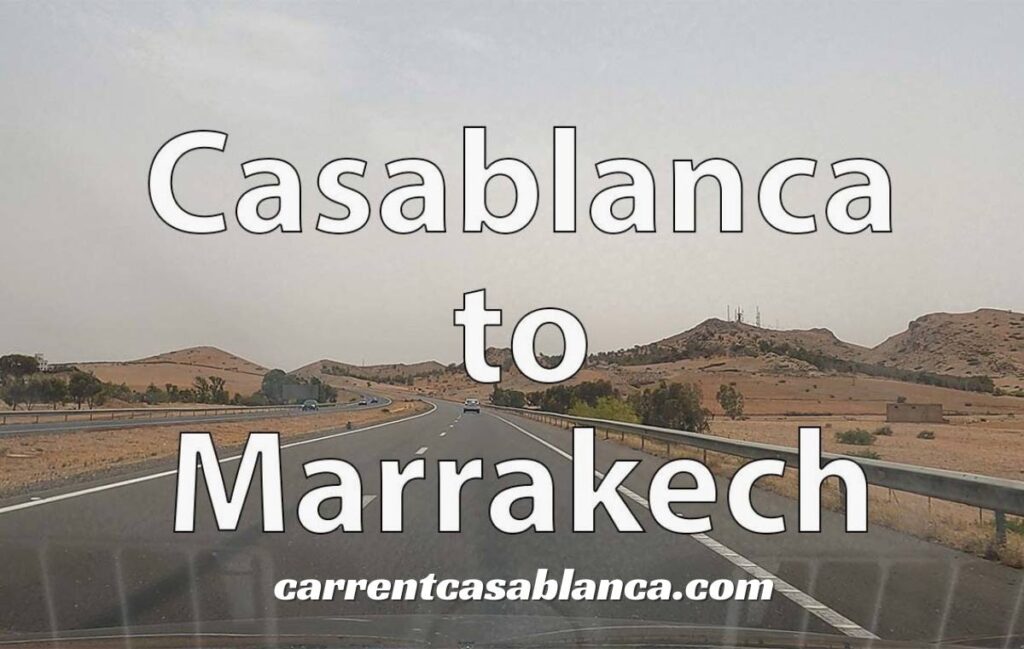
Can I drive from Casablanca to Marrakech by rental car?
Yes – one-way rentals from Casablanca to Marrakech are common and straightforward. The journey takes approximately 2.5–3 hours via the A7 motorway. Toll cost is approximately 70–85 MAD. One-way drop-off fees typically apply; confirm costs when booking.
Should You Drive in Morocco?
The honest answer is yes – if you are a reasonably confident driver. Morocco rewards self-drive travellers with experiences that no tour bus or taxi can replicate: pulling over at a Berber village in the High Atlas, watching the sunset from the Draa Valley, arriving at your desert camp with no fixed timetable.
Ready to start your Morocco road trip? Explore our car rental fleet at Car Rent Casablanca – economy cars, SUVs, 4x4s, and luxury vehicles available for pickup at Casablanca Mohammed V Airport (CMN), with one-way options to Marrakech, Agadir, Fes, and beyond.
