

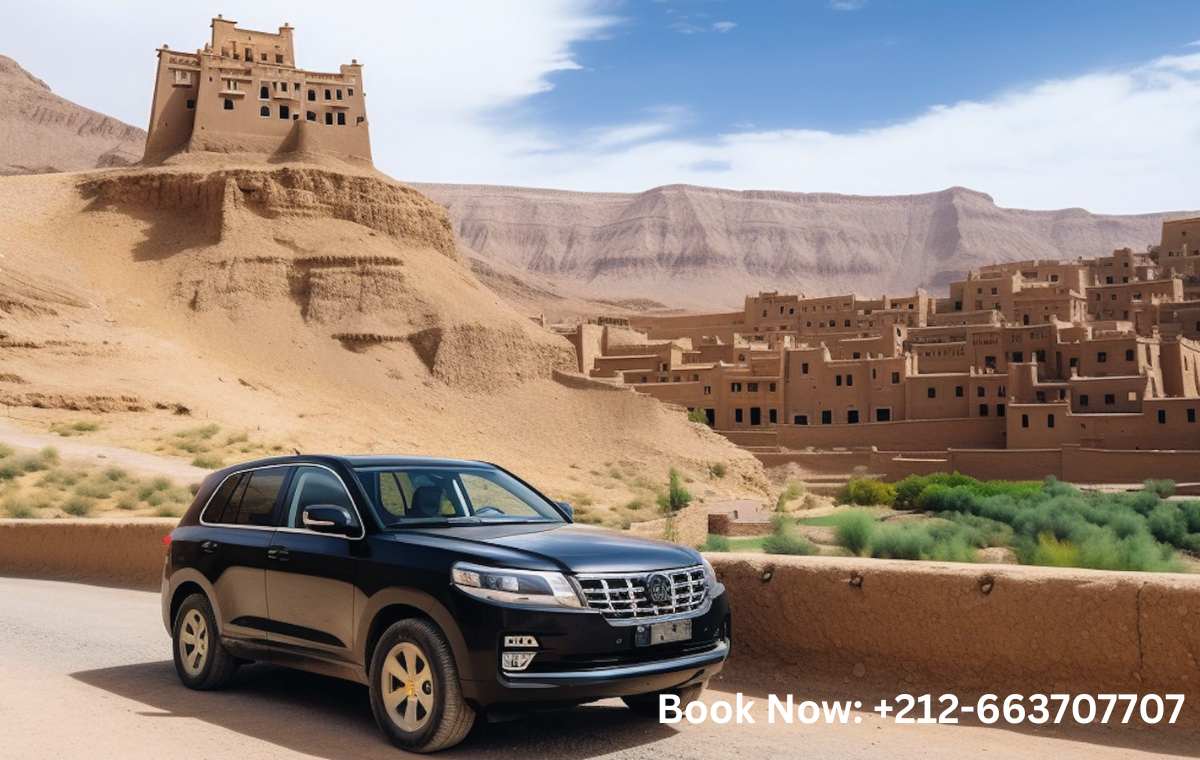
GPS Included Rental Car Morocco – Complete Navigation Guide (2026)
A GPS included rental car Morocco is a self-drive vehicle fitted with offline navigation that works without mobile data. Most tourists need it because Morocco has complex medina zones in Fes and Marrakech where cars cannot enter inner streets, Atlas Mountain passes where mobile signal disappears for 30 to 40 km, bilingual Arabic and French road signs that create confusion at speed, and Sahara desert routes with no landmarks or network coverage.
GPS Included Rental Car Morocco makes exploring the country easier with turn-by-turn navigation, convenient route planning, and reliable directions for cities, attractions, and road trips.
Who needs it: Independent travelers, airport arrivals, and anyone driving beyond Casablanca city limits.
What it costs: $25 to $110 per day depending on vehicle class. GPS add-on costs $5 to $10 per day on economy cars. Premium SUVs and luxury vehicles include built-in navigation at no extra charge.
Why it matters: Offline GPS works when Google Maps goes blank. In Morocco, Google Maps goes blank more often than tourists expect.
Does Your Morocco Rental Car Include GPS Automatically?
No. GPS inclusion depends entirely on the vehicle you book.
| GPS Setup | How It Works | Works Offline | Vehicles | Extra Cost |
| Built-in factory navigation | Dashboard screen, preloaded maps | Yes | Mercedes, BMW, Audi, Porsche, VW Touareg | Included |
| Dedicated GPS add-on | Portable Garmin or TomTom unit | Yes | Dacia Logan, Renault Clio, Peugeot 208, Hyundai i20 | $5 to $10/day |
| Smartphone bracket only | Your phone, data required | No | Budget economy cars | Free but unreliable |
The rule: Economy cars need a GPS add-on. Premium cars include it. Always confirm at booking, not at pickup.
Where GPS Makes the Biggest Difference in Morocco
Fes Medina: 9,400 Alleyways, Zero Street Signs
Fes el-Bali is the world’s largest car-free urban zone. Cars cannot enter inner medina streets. The problem is finding the correct approach gate for your hotel on the perimeter. Without GPS, tourists circle the medina walls for 30 to 60 minutes. With offline GPS, you navigate directly to the drop-off point and walk the final 300 meters.
Marrakech Old City: One-Way Traps and Restricted Lanes
Marrakech has one-way restrictions, sudden no-entry zones, and moped traffic that makes reversing impossible. GPS routes you to the correct hotel approach before you enter the restricted zone. Without it, tourists regularly get trapped inside souk lanes with no way out.
Tizi n’Tichka Pass: Where Google Maps Goes Silent
The mountain route from Marrakech south via the N9 highway reaches 2,260 meters elevation. Mobile signal disappears for 20 to 40 km stretches. Google Maps cannot recalculate without data. Offline GPS runs on satellite signal alone and is unaffected by mobile blackouts. Before driving the Casablanca to Marrakech route, confirm your GPS works offline.
Sahara Desert Routes: No Landmarks, No Signal, No Fuel for 120 km
Routes toward Merzouga and Zagora have no mobile coverage, no road markers, and fuel stations spaced 80 to 120 km apart. GPS with offline Morocco desert maps is safety equipment here, not a navigation preference. See best roads to drive in Morocco for route planning by terrain type.
Bilingual Road Signs
Morocco signs appear in Arabic and French. Highway exits vary by region. GPS confirms your exit before the sign appears, removing language-based confusion at speed.
GPS vs Google Maps vs Offline Apps in Morocco
| Navigation Tool | Works Without Data | Atlas Mountains | Sahara Desert | Medina Approach |
| Built-in GPS | Yes | Excellent | Excellent | Good |
| GPS add-on device | Yes | Excellent | Excellent | Good |
| Maps.me offline | Yes | Very Good | Very Good | Excellent |
| Google Maps | No | Poor | No signal | Good |
| Waze | No | Poor | No signal | Good in cities |
Best setup for Morocco: Built-in or add-on GPS as primary navigation plus Maps.me with offline Morocco maps downloaded on your phone as backup. Download Maps.me at home before traveling. The Morocco offline map is 350 MB and takes 8 minutes on fast WiFi. Do not try to download it at CMN airport on public WiFi after a long flight.
Which GPS Car Should You Rent in Morocco?
Your vehicle choice should match your route, not just your budget:
City Driving Only (Casablanca, Rabat, Tangier)
Best choice: Dacia Logan, Renault Clio 5, Peugeot 208, Hyundai i20
GPS setup: Add-on GPS device ($5 to $10/day). Works fully offline.
Why: These economy cars handle paved city roads comfortably. Add the GPS device and they cover every urban route without issues. Browse the economy car rental Casablanca page for current rates.
City Plus Highway Routes (Casablanca to Marrakech, Casablanca to Agadir)
Best choice: Dacia Duster, Hyundai Tucson, Renault Arkana, VW T-Roc
GPS setup: Built-in navigation on newer models. Fully offline.
Why: These mid SUVs handle autoroutes, Atlas mountain passes, and Marrakech medina approach roads with confidence. The Dacia Duster is Morocco’s single most practical rental SUV for tourists. Families should check best SUV to rent in Casablanca for families for space and luggage comparisons.
Desert, Mountain Pass, and Off-Road Routes
Best choice: Jeep Wrangler, Jeep Grand Cherokee, VW Touareg
GPS setup: Full factory navigation with offline piste track maps.
Why: Piste routes toward Merzouga and Zagora require genuine 4WD capability. Standard economy cars get stuck on desert tracks. The 4×4 rental Morocco page covers these vehicles specifically.
Business Travel and Luxury Airport Transfers
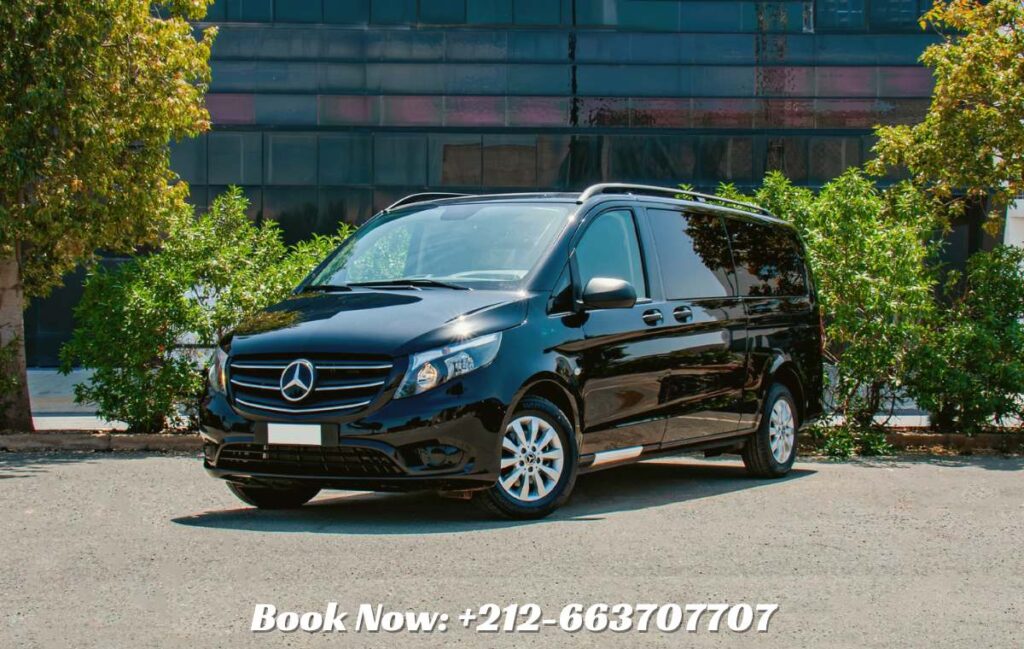
Best choice: Mercedes E-Class, BMW 5 Series, Audi Q8, Porsche Cayenne
GPS setup: Advanced factory navigation with real-time traffic overlay when connected to Moroccan SIM data.
Why: GPS is included as standard. No add-on required. No extra cost. These vehicles offer the most complete navigation experience available. The luxury car rental Casablanca page has the full premium fleet with current rates.
CMN Airport GPS Pickup: Do This Before You Drive
The most common GPS mistake in Morocco happens in the first 10 minutes after collecting your car at Casablanca Mohammed V International Airport. Most tourists drive straight out without testing navigation, get confused at the first roundabout exit, and lose 20 minutes immediately.
Do this before moving the car:
One: Turn on the GPS at the rental counter. Do not leave before it is switched on and loaded.
Two: Enter your first destination and confirm the route appears. Casablanca city center routes via the A5 autoroute. Marrakech routes via the A7. Rabat routes via the A1.
Three: Ask one direct question: does this GPS work without mobile data? The answer must be yes. If the agent is unsure, test it by switching your phone to airplane mode and checking that routing continues.
Four: Drive 300 meters within the airport road network before exiting. Confirm the GPS is speaking, the screen is visible, and the route is correct.
This takes seven minutes and prevents every common GPS failure. For full CMN pickup instructions see the Casablanca airport car rental guide 2026.
Prefer hotel delivery with GPS already configured? Car hire in Casablanca with hotel delivery brings the vehicle directly to your accommodation.
Morocco’s Road Network: When GPS Is Critical vs When It Is Not
GPS is critical on these routes:
The N9 mountain highway from Marrakech south through Tizi n’Tichka pass to Ouarzazate. The desert corridor south from Ouarzazate toward Merzouga and Zagora. All medina approach routes in Fes, Marrakech, and Chefchaouen. Rural P-roads and piste tracks throughout the Atlas region.
GPS is helpful but not critical on these routes:
The A7 autoroute Casablanca to Marrakech (240 km, well signed in French). The A1/A3 north corridor Casablanca to Rabat to Tangier. The A5 from Casablanca to CMN airport (30 km, simple direct route).
The key difference: On autoroutes, signs are clear and French-only is manageable. Off autoroutes, signage becomes sparse, bilingual, or absent entirely. This is where GPS earns its value.
The driving in Morocco tips guide covers speed limits, toll booth payment, gendarmerie checkpoints, and rural road behavior in full detail. Read it before crossing the Atlas.
What You Need to Rent a GPS Car in Morocco
Driver’s license: Your home country license is accepted directly. Most European, UK, North American, and Gulf country licenses are valid.
International Driving Permit: Recommended as supporting documentation. Some rental companies require it for non-French European licenses. Full country-by-country breakdown at documents needed to rent a car in Morocco.
Passport: Required for rental contract verification.
Credit card: Required for deposit pre-authorization. Typical holds range $200 to $500 depending on vehicle class.
Minimum age: 21 for economy vehicles. 25 for premium and luxury models.
UK license holders: See driving in Morocco with a UK license for the exact process post-Brexit.
French citizens: Standard French license is fully accepted. See renting a car in Morocco as a French citizen for practical specifics.
All other foreign licenses: See driving in Morocco with a foreign license.
Insurance: What to Confirm Alongside GPS
Third-Party Liability: Mandatory, included in every Morocco rental.
Collision Damage Waiver (CDW): Covers your vehicle’s damage with a defined excess. Strongly recommended for mountain and desert routes.
Super CDW: Reduces or removes the excess. Worth considering on premium vehicles where the excess can reach $1,500 to $2,000.
GPS damage coverage: Ask specifically whether a cracked or dropped GPS unit is covered under CDW. This is one of the most common minor claims in Morocco rentals.
Full breakdown of every coverage tier at insurance options for rental cars in Morocco. Compare GPS add-on costs alongside insurance tiers at car rental fee breakdown.
Self-Drive with GPS vs Car with Driver: Which Is Right for You?
A professional driver handles medina approaches instinctively, knows every fuel station on the Atlas route, and navigates police checkpoints without hesitation. GPS is not needed because local knowledge replaces it entirely. Car rental with driver services in Casablanca covers this option.
Self-drive with GPS gives complete freedom. Stop at any village, extend a mountain detour, explore an unmarked viewpoint. GPS makes this safe without requiring local knowledge. Compare car rental with driver vs self-drive in Casablanca to decide which fits your trip style.
Many first-time Morocco visitors use a driver on day one from CMN airport to their hotel to observe road behavior, then switch to self-drive with GPS for the rest of the trip.
6 GPS Mistakes Tourists Make in Morocco
Mistake one: Trusting GPS into medina interiors. GPS routes you toward Fes or Marrakech medina gates. Cars cannot enter inner streets. Stop at the outer gate and walk.
Mistake two: Not downloading offline maps before arrival. Download Maps.me and the Morocco offline map pack at home. CMN airport WiFi is slow during peak arrival hours.
Mistake three: Using economy cars on desert piste tracks. Standard economy cars are not built for unmarked desert terrain. Rent the Dacia Duster or Jeep Wrangler for serious off-road navigation.
Mistake four: Setting GPS to English labels only. Morocco road sign terminology matches French GPS labels more accurately. Set GPS to French display where available.
Mistake five: Not testing GPS before leaving the airport. Discovering GPS is not working after entering Casablanca traffic is genuinely stressful. Test at the counter.
Mistake six: Ignoring toll payment preparation. GPS shows routes but not toll booth locations or costs. Morocco autoroutes have regular péage points. Keep Moroccan Dirhams accessible. The A7 Casablanca to Marrakech costs approximately 120 to 180 MAD in total tolls. See driving a rental car in Morocco for complete toll guidance.
Additional practical tips at tips for car rental in Casablanca.
Book Your GPS Included Rental Car in Morocco
CarRentCasablanca.com provides GPS-equipped vehicles from economy Dacia Logan to luxury Audi Q8 and Porsche Cayenne, with pickup at Casablanca Mohammed V Airport, hotel delivery across the city, and one-way car rental from Casablanca to Marrakech for route-based travel.
Browse the complete vehicle fleet, confirm GPS inclusion at booking, and rent a car in Casablanca before your travel dates.
For long-stay visitors, location voiture longue durée offers GPS included monthly rates in Casablanca, Marrakech, Agadir, and Fes.
FAQ: GPS Included Rental Car Morocco
Do rental cars in Morocco automatically come with GPS?
No. Economy cars require a GPS add-on device ($5 to $10 per day). Mid-range SUVs may include built-in navigation. Luxury and premium vehicles include factory GPS as standard at no extra charge. Always confirm at booking.
Is GPS genuinely necessary in Morocco or just useful?
Genuinely necessary for most trips. Fes medina has 9,400 unmarked alleyways, Atlas Mountain passes lose mobile signal for 20 to 40 km, and Sahara routes have no landmarks or coverage. Google Maps fails in all three scenarios. Offline GPS continues working regardless.
Can I use Google Maps instead of a GPS device in Morocco?
Google Maps works in Casablanca, Rabat, and Marrakech city centers with a Moroccan SIM card. It fails on mountain passes and desert routes due to signal loss. Download Maps.me with offline Morocco maps as a free zero-data backup before traveling.
Which rental car is best for GPS navigation in Morocco?
The Dacia Duster with built-in navigation is the best balance of terrain capability, comfort, and price for most Morocco tourists. For business travel, the Mercedes E-Class includes the most advanced factory GPS system. For desert and piste routes, the Jeep Wrangler handles the toughest terrain.
How much does GPS add to a Morocco rental?
GPS adds $5 to $10 per day on economy vehicles. On SUVs and luxury cars it is included. Over seven days, GPS adds $35 to $70 on budget rentals. A Moroccan SIM with data costs $5 to $10 for one week but is unreliable outside cities.
Can foreigners rent GPS cars in Morocco?
Yes. Most international driving licenses are accepted. A Moroccan SIM from Maroc Telecom, INWI, or Airtel Maroc costs $5 to $10 for one week of data. See can you rent a car in Morocco for the full eligibility and documentation guide.
Is it safe to drive in Morocco with GPS?
Yes. Driving in Morocco is safe for tourists with proper preparation. GPS reduces the primary risk which is navigation errors in unfamiliar terrain, not crime or road safety. See is it safe to drive in Morocco for a realistic assessment of road conditions and driving culture.
