
Casablanca to Tangier Drive: Route, Stops, and Complete Guide
The Casablanca to Tangier drive covers about 338 to 340 km along the A1 motorway, taking roughly 3 hours 30 minutes to 3 hours 46 minutes without stops. The route runs north along Morocco’s Atlantic coast through Rabat, Kenitra, and Larache before reaching Tangier. For travelers who don’t want to drive, the Al Boraq high-speed train covers the same distance from Casa-Voyageurs to Tanger Ville in about 2 hours 10 to 2 hours 17 minutes.
| Data point | Value |
| Driving distance | 338–340 km |
| Driving time (A1 motorway) | 3h 30m – 3h 46m |
| Toll cost (one-way, Class 1 car) | ≈100–123 MAD |
| Fuel cost estimate | 350–500 MAD |
| Al Boraq train (Casa-Voyageurs → Tanger Ville) | ≈2h 10m, from around 300 MAD 2nd class |
| CTM/Supratours bus | 5–6 hours, ≈100–120 MAD |
| Best months | April–June and September–October |
Should You Drive, Take the Train, or Ride the Bus?
This is the defining question for anyone researching the Casablanca to Tangier drive, because unlike the Agadir route, the train is a genuinely strong competitor here. The Al Boraq TGV, Africa’s first high-speed rail line, makes the trip in about two hours from Casa-Voyageurs station, which is faster than driving door-to-door for a solo traveler. Driving wins if you want to stop along the way – at Rabat, Asilah, or the Moulay Bousselham lagoon – or if you are traveling as a group of two or more, since fuel and tolls are split across the car rather than paid per ticket.
| Factor | Driving | Al Boraq train | CTM/Supratours bus |
| Time | 3h 30m–3h 46m | ≈2h 10m | 5–6 hours |
| Cost basis | Fixed per car (fuel + tolls) | Per person, ≈300 MAD | Per person, ≈100–120 MAD |
| Flexibility | Full – stop anywhere | None | None |
| Best for | 2+ travelers, scenic stops, onward travel | Solo travelers, speed | Ultra-budget travel |
The Driving Route: A1 Motorway Step by Step
The route follows the A1 motorway north from Casablanca through Mohammedia, Rabat, Kenitra, and Larache before the final stretch into Tangier. It is a modern toll highway for essentially the entire distance, with a 120 km/h speed limit, clear Arabic/French signage, and rest areas spaced roughly every 40–60 km.
Mohammedia (≈25 km, quick detour)
The first town north of Casablanca, known locally for its Port Blondin lighthouse and beachfront seafood restaurants. A short detour here works well as an early coffee or lunch stop, and re-entry to the A1 is straightforward.
Rabat (≈87 km, on-route)
Morocco’s capital is the most substantial stop on this route and deserves at least two hours, or an overnight if you have the time. Highlights include the Kasbah of the Udayas, the unfinished 12th-century Hassan Tower, the Mausoleum of Mohammed V, and the Chellah necropolis with its Almohad and Roman remains. We cover Rabat in full in our dedicated Casablanca to Rabat day trip guide, which is worth reading if you plan to linger here.
Kenitra (≈133 km)
A working agricultural and industrial city along the Sebou river basin. Most drivers pass through without stopping, though it is a sensible fuel and rest break roughly a third of the way into the trip.
Larache and Asilah (≈260–300 km, short detour)
Larache has Spanish colonial architecture and the nearby Lixus archaeological site. A little further north, Asilah is worth the 15-minute detour off the motorway for its whitewashed medina walls covered in international art murals – a legacy of the town’s annual arts festival. Both towns make a good final stretch break before Tangier.
Arrival in Tangier
The A1 brings you onto Tangier’s ring road, from which you can head to the port, the Kasbah district, or the Grand Socco. If you have time on arrival day, the Caves of Hercules and Cape Spartel, just past the city, are a popular sunset stop where the Atlantic meets the Mediterranean.
Driving Tips for the Casablanca–Tangier Corridor
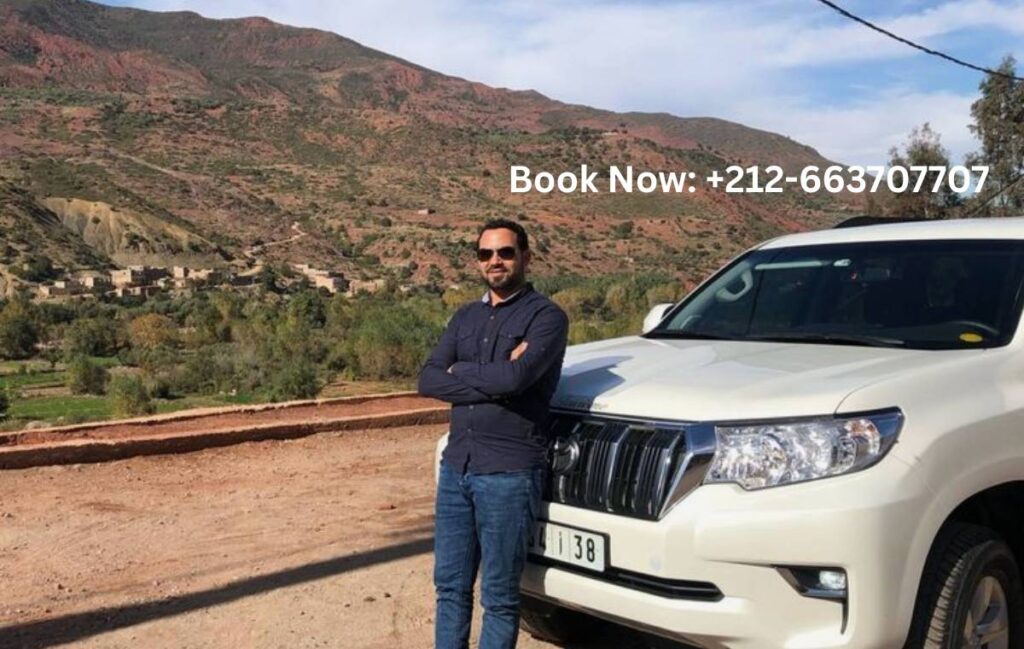
The A1 is one of Morocco’s most modern motorways, so the drive itself is easier than many first-time visitors expect. A few practical points still matter. Toll booths accept cash in Moroccan dirhams – carry small notes. Speed cameras are positioned at motorway exits and urban approaches, so stay within the 120 km/h motorway limit and the lower limits through towns. Police checkpoints are routine; keep your license, passport, and rental agreement within reach and you’ll typically be waved through without stopping.
As with any long Moroccan drive, avoid the final stretch after dark if you can help it – non-motorway sections near towns can have poor lighting and unexpected pedestrian or livestock crossings. For a full breakdown of local road rules, read our driving in Morocco tips guide, and confirm your paperwork against our documents needed to rent a car in Morocco checklist before pickup. UK license holders should also check our drive in Morocco with a UK license guide.
Car Rental for the Casablanca to Tangier Drive
A compact or economy car is sufficient for this route since it is almost entirely motorway driving. Couples and solo travelers do well with a Dacia Logan or Dacia Sandero; groups of three or four, or anyone continuing on to Chefchaouen afterward, may prefer a Dacia Duster for the extra luggage space and comfort on mountain roads beyond Tangier.
Many travelers on this route choose a one-way rental: pick up in Casablanca – ideally with a CMN airport pickup if you’re arriving by air – and drop off in Tangier rather than driving back. See our full fleet for current one-way availability and fees. If you’re starting from a city-center hotel instead, our hotel delivery service in Casablanca brings the car to you.
Should You Drive Yourself or Hire a Driver?
Self-driving is the right call if you want to stop at Rabat, Asilah, or Moulay Bousselham on your own schedule. If you’d rather not handle Moroccan motorway driving yourself – especially with a full family, heavy luggage, or after a long flight – our **car rental with driver services in Casablanca** covers this exact route with an English, French, or Arabic-speaking driver.
Best Time of Year for This Route
| Season | Conditions | Notes |
| Spring (Apr–Jun) | 18–26°C, sunny | Ideal driving weather |
| Summer (Jul–Aug) | 24–32°C, dry | Great roads, but Tangier gets crowded |
| Autumn (Sep–Oct) | 20–28°C, mild | Excellent, low crowds |
| Winter (Nov–Mar) | 10–16°C, occasional rain | Good roads, pack for wet patches |
What Makes the Casablanca–Tangier Corridor Different
Unlike the coastal drive south toward Agadir, the Casablanca to Tangier drive is almost entirely motorway from start to finish, which makes it one of the most predictable long drives in Morocco. There is very little of the winding, town-slowed driving you find on routes further south – the A1 was built as a fast, direct corridor linking the country’s two largest economic centers, and it shows in the consistency of the road surface and signage. This is also the corridor most likely to be extended and upgraded further given Morocco’s ongoing motorway investment ahead of shared hosting of the 2030 FIFA World Cup, so road quality on this route tends to only improve.
Because the route runs so close to the Atlantic coastline for much of its length, it also opens up short detours that don’t cost much extra driving time – Mohammedia and Asilah both sit within a few minutes of the motorway rather than requiring a long backtrack, which is part of why this route works equally well as a fast transfer or a more relaxed day of driving with stops.
What to Pack and Prepare Before You Leave
The essentials are the same as any Moroccan road trip – driving license, passport, and rental agreement kept accessible for checkpoints – but a few things are specific to this corridor. Carry small MAD notes for the toll booths along the A1, since not every booth can break large bills quickly. If you’re planning a stop in Rabat, comfortable walking shoes are worth having in the car rather than packed away, since the Kasbah of the Udayas and Chellah both involve walking on uneven historic stone. And if your trip continues beyond Tangier toward Chefchaouen or a ferry crossing, keep your rental agreement’s cross-border and one-way terms handy, since these can differ from a standard round-trip booking.
Arriving in Tangier: What to Do First
Tangier’s character comes from its position where the Atlantic Ocean meets the Mediterranean Sea, and its long history as an international zone still shows in the mix of French, Spanish, and Moroccan architecture around the Kasbah and Grand Socco. First-time visitors usually start at the Kasbah Museum, then wander down through the Petit Socco, a small square once favored by writers including Paul Bowles and William S. Burroughs. For a classic end to arrival day, Café Hafa, a cliffside terrace overlooking the Strait of Gibraltar, is a longstanding local institution for mint tea at sunset.
If you have an extra day, Tangier is also a practical base for onward trips: the Blue City of Chefchaouen is about two hours into the Rif Mountains, and ferries from Tangier’s port cross to Tarifa or Algeciras in Spain in roughly one to two hours if you want to continue into Europe.
Solo Travelers, Families, and Group Considerations
This route is one of the more forgiving long drives in Morocco for solo travelers, given how consistently motorway-based it is – there’s little of the unpredictable town-center navigation you find on more rural routes. That said, solo travelers who don’t specifically want the flexibility of a car often do better with the Al Boraq train, both for cost and for not driving alone for over three hours. Families benefit from the A1’s frequent rest areas, which make regular breaks easy without losing much time, and the Rabat stop doubles as both a sightseeing break and a chance to stretch properly rather than just a fuel stop. For groups of three or four, splitting the fixed cost of fuel and tolls across a shared car usually works out cheaper per person than four individual train or bus tickets.
One-Way Rentals and Route Flexibility
Because the A1 motorway connects so many major cities in a single corridor, a one-way rental on this route is genuinely convenient rather than just a nice-to-have. Picking up in Casablanca and dropping off in Tangier means you’re not obligated to retrace the same 340 km if your onward plans take you further north – by ferry to Spain, or east toward Chefchaouen and Tetouan. Confirm your exact drop-off location (Tangier city center, the port, or Ibn Battouta Airport) when booking, since fees can vary slightly by location.
Common Mistakes to Avoid on This Route
- Underestimating rush-hour traffic around Rabat and Salé, which can add 20–30 minutes to an otherwise straightforward motorway run.
- Skipping Rabat entirely. It sits almost exactly on the route and rewards even a two-hour stop, unlike more remote detours that cost significant extra driving.
- Not comparing the train option for solo trips. If you’re traveling alone with no plans to stop, the Al Boraq train is often faster and less stressful than driving.
- Arriving in Tangier after dark without a parking plan. Book accommodation with parking, or confirm a nearby garage, before you arrive in the evening.
- Forgetting that Tangier sits at the edge of two seas. Cape Spartel and the Caves of Hercules are a short detour past the city and easy to miss if you don’t plan for them in advance.
Why Book Your Rental With Carrent Casablanca
For a route this dependent on smooth logistics – a fixed motorway drive with a handful of worthwhile detours – the details of your pickup matter more than they might on a shorter city rental. Our about us page explains how we operate as a Maarif-based, locally run agency rather than an international chain, which in practice means faster answers on one-way terms, drop-off locations, and any changes to your plans once you’re already on the road. Start by comparing options on our car rental in Casablanca page, then browse the full fleet to match a car to your route before booking.
Frequently Asked Questions – Casablanca to Tangier Drive
How long does it take to drive from Casablanca to Tangier?
About 3 hours 30 minutes to 3 hours 46 minutes via the A1 motorway without stops; budget closer to 5 hours with two rest breaks.
Is it better to drive or take the train from Casablanca to Tangier?
For a solo traveler, the Al Boraq high-speed train (about 2h10, roughly 300 MAD) is faster and often cheaper. For two or more travelers, or anyone who wants to stop at Rabat or Asilah, driving is usually the better option.
How much are the tolls from Casablanca to Tangier?
Roughly 100 to 123 MAD one-way for a Class 1 passenger car on the A1 motorway, payable in cash at toll booths.
Is the drive from Casablanca to Tangier safe?
Yes. The A1 is a modern, well-maintained toll motorway. Avoid driving the final stretch after dark, watch for speed cameras, and expect occasional routine police checkpoints.
What is the Al Boraq train?
Africa’s first high-speed rail line, running up to 320 km/h between Casablanca’s Casa-Voyageurs station and Tanger Ville in about two hours.
What are the best stops between Casablanca and Tangier?
Rabat for the Kasbah of the Udayas and Hassan Tower, Mohammedia for a quick seafood stop, and Asilah for its art-mural medina walls near the end of the drive.
Can I rent a car in Casablanca and drop it off in Tangier?
Yes, one-way rentals between Casablanca and Tangier are available, with a one-way drop fee added to the standard rental cost.
Do I need an international driving permit to drive from Casablanca to Tangier?
Most foreign licenses in Latin script are valid to drive in Morocco for visitors; an International Driving Permit is recommended as a backup, particularly for non-Latin script licenses.
Can I take a ferry from Tangier to Spain with a rental car?
Ferries run from Tangier to Tarifa and Algeciras in around one to two hours, but taking a rental car across requires prior approval from the rental company – confirm this before booking if it’s part of your plan.
What is the fastest way to reach Tangier from Casablanca without driving?
The Al Boraq high-speed train is the fastest public option, covering Casa-Voyageurs to Tanger Ville in roughly 2 hours 10 minutes.
